Man-Eating Crocodiles in Africa: A Professional Crocodile Hunter’s Experience
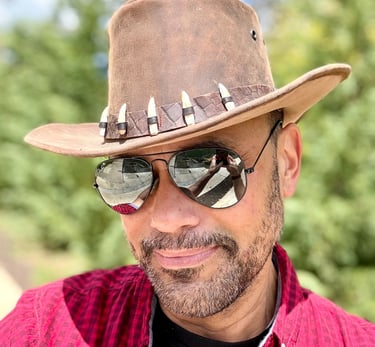
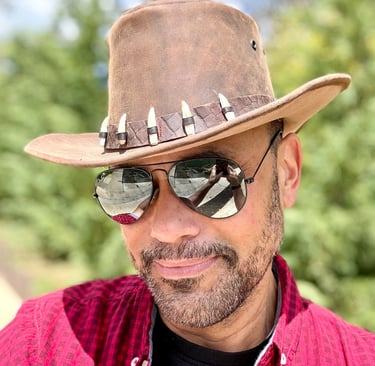
Ian Bartlett, The Real Crocodile Hunter®, shares first-hand experience of man-eating Nile crocodiles, human-crocodile conflict and problem animal control in Malawi.
By Ian Bartlett — The Real Crocodile Hunter®
9/14/20265 min read


Man-Eating Crocodiles in Africa: A Professional Crocodile Hunter’s Experience
By Ian Bartlett — The Real Crocodile Hunter®
For approximately ten years, I hunted some of Africa’s most dangerous Nile crocodiles—not for sport, but because particular crocodiles had become a threat to people and communities.
My work as a licensed crocodile hunter in Malawi took me into rivers, marshes and remote areas where people lived alongside one of Africa’s most formidable predators. Some of the crocodiles I pursued were suspected or known man-eaters. Others were repeatedly taking livestock or creating an unacceptable danger around places where people fished, collected water, travelled by canoe or simply went about their daily lives.
These experiences taught me something important: human-crocodile conflict looks very different when viewed from the riverbank than it does from thousands of miles away.
The Nile Crocodile: An Extraordinary African Predator
The Nile crocodile (Crocodylus niloticus) is one of Africa’s great predators. Powerful, highly adapted and capable of surviving in environments ranging from large rivers and lakes to wetlands and marshes, it has occupied African waterways for millions of years.
I have enormous respect for crocodiles.
That may sound strange coming from somebody who spent years hunting them, but the more time I spent around crocodiles, the more I came to appreciate their abilities.
They are patient. They are extraordinarily well adapted to their environment. And a large crocodile can be almost invisible in water where people may be standing only metres away.
Most crocodiles do not become habitual man-eaters. But where large crocodiles and people depend upon the same waterways, conflict can become inevitable.
Human-Crocodile Conflict in Malawi
In parts of rural Africa, a river isn’t simply scenery.
It can be a road, fishing ground, water source and part of everyday life.
During my years in Malawi, I worked in areas where local people could not simply decide to stay away from crocodile habitat. Fishermen had livelihoods to maintain. Families needed access to water. Canoes provided transportation. Livestock came close to riverbanks.
That creates circumstances very different from those experienced by somebody encountering a crocodile from the safety of a tourist boat or protected reserve.
When a crocodile repeatedly began taking livestock—or, far more seriously, attacking people—the consequences for a community could be devastating.
This was the environment in which much of my crocodile work took place.
What Is a Man-Eating Crocodile?
The phrase “man-eating crocodile” is dramatic, but I believe it should be used carefully.
Not every large crocodile is a man-eater, and not every crocodile seen near a community should automatically be regarded as dangerous enough to destroy.
The problem was identifying individual animals associated with serious conflict.
Tracking a problem crocodile required patience, observation and local knowledge. Villagers and fishermen often knew their waterways intimately. They could tell us where a crocodile had been seen, where an attack had occurred, where livestock had disappeared and which channels or sandbanks a large animal regularly used.
That information could become extremely important.
Crocodile hunting was therefore rarely just a case of arriving at a river and firing at the first crocodile we saw.
The objective was the problem animal.
Hunting Problem Crocodiles
My work formed part of what is commonly described as Problem Animal Control (PAC)—responding when wildlife presents a serious threat to people, livestock or livelihoods.
I operated under crocodile-hunting licences issued in Malawi and worked alongside local communities and wildlife personnel during different aspects of my field experience.
There was nothing glamorous about sitting beside an African river for hours waiting for a crocodile that might never appear.
Sometimes we worked from boats. Sometimes we waited from the bank. At other times, information from villagers sent us into difficult stretches of river or wetland.
The conditions could be unpredictable.
And when the target was a very large crocodile associated with attacks on people, mistakes could have serious consequences.
Why Not Simply Relocate the Crocodile?
One of the most common modern questions is:
Why kill a dangerous crocodile? Why not capture it and move it somewhere else?
It is a reasonable question.
Where safe capture and relocation are practical, properly authorised and scientifically justified, they deserve consideration. But relocation is not a magic solution to every human-wildlife conflict.
Capturing a large Nile crocodile requires trained personnel, specialised equipment, suitable transport and somewhere appropriate—and legally authorised—to release the animal.
Those resources are not always readily available in remote areas.
There is also a more fundamental question: where do you relocate a large crocodile known to attack people?
Moving a dangerous animal does not automatically eliminate the danger. Depending on the circumstances, it may simply move the problem somewhere else.
Wildlife management decisions have to be based on the circumstances on the ground rather than an ideal solution that may not actually be available.
The People Behind the Statistics
Reports of crocodile attacks often become numbers.
One person killed. Another injured. Livestock lost.
But every number represents a family and a community.
I met people who lived with the presence of crocodiles as part of everyday life. They did not necessarily hate crocodiles. Many had lived beside them for generations.
What they feared were particular animals that had crossed the line from being part of the environment to becoming an immediate danger.
That distinction matters.
Conservation cannot succeed if the lives and concerns of people living alongside dangerous wildlife are dismissed.
Conservation Is Not Always Simple
My later conservation experience at Mpatamanga Wildlife Ranch reinforced this lesson.
For more than two decades, I have been involved in conserving indigenous woodland and wildlife habitat in Malawi. More than 500,000 indigenous trees have been conserved within the Mpatamanga landscape.
That experience changed and broadened my relationship with African wildlife.
But conservation does not mean pretending that wildlife never creates problems.
Sometimes conservation involves protecting habitat.
Sometimes it involves preventing poaching or illegal logging.
Sometimes it means allowing predators to perform their natural ecological role.
And occasionally it means making the difficult decision to remove an individual animal that presents an unacceptable danger to people.
Those realities can coexist.
What Crocodile Hunting Taught Me
Years spent around crocodiles taught me respect rather than contempt for them.
A Nile crocodile is not evil because it attacks prey. It is behaving according to instincts shaped by millions of years of evolution.
At the same time, a fisherman trying to feed his family has a right to return home alive.
Finding the balance between those two realities is one of the hardest challenges in human-wildlife conflict.
There are rarely perfect answers.
That is why I believe decisions about dangerous wildlife should involve the authorities, scientific understanding and—critically—the experience and knowledge of the communities actually living with the animals.
From the Rivers of Malawi to
Memoirs of a Real Crocodile Hunter
Many of these experiences eventually became part of my book, Memoirs of a Real Crocodile Hunter.
The book tells the stories behind the hunts: the rivers, the people who worked alongside me, the long waits, the mistakes, the dangers and some of the crocodiles that I will never forget.
They are not stories invented for television.
They came from my own experiences in Africa.
Today, through The Real Crocodile Hunter®, I continue telling those stories while also documenting the conservation work that became an increasingly important part of my life.
The two subjects—dangerous wildlife and conservation—may initially appear contradictory.
My experience taught me otherwise.
Real conservation is not about choosing between people and wildlife. It is about finding ways for both to survive in landscapes they share.
About Ian Bartlett
Ian Bartlett — The Real Crocodile Hunter® is an author, conservationist and former licensed crocodile hunter whose field experience includes approximately ten years working with problem and man-eating crocodiles in Malawi. His books include Memoirs of a Real Crocodile Hunter and Mpatamanga.
The Real Crocodile Hunter®:
https://therealcrocodilehunter.com
Ian Bartlett:
https://ianbartlett.co.uk
Mpatamanga Wildlife Ranch:
https://mpatamangawildliferanch.com
The Real Crocodile Hunter®
© 2026 Ian Bartlett.
The Real Crocodile Hunter® is a registered trademark. All Rights Reserved.