Mpatamanga Hydropower Limited
Could Malawi's Flagship Energy Project Become a White Elephant?
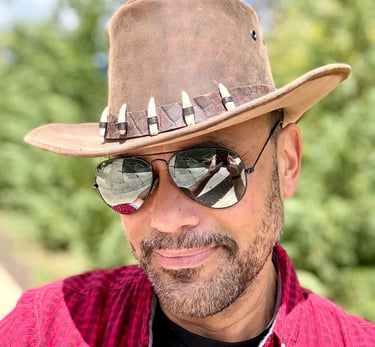
Ian Bartlett-The Real Crocodile Hunter
10/31/20265 min read


Mpatamanga Hydropower: Could Malawi's Flagship Energy Project Become a White Elephant?
By Ian Bartlett | British Author, Conservationist and Founder of Mpatamanga Wildlife Ranch
Malawi needs reliable electricity. There is little doubt about that. Power shortages have constrained businesses, discouraged investment and limited economic opportunities for years.
But an important question remains: will the Mpatamanga Hydropower Project deliver lasting economic benefits, or could it become an expensive infrastructure asset that fails to fulfil its promises?
The distinction matters. A white elephant is not necessarily an abandoned project. It can be a completed, functioning development whose financial burden and operating costs outweigh the benefits it ultimately delivers.
Mpatamanga deserves scrutiny precisely because of its scale, its environmental consequences and the expectations being placed upon it.
Twenty years of conservation at stake
For two decades, I invested my own time and resources in protecting indigenous forests, wildlife and biodiversity at Mpatamanga Gorge along the Shire River.
My work involved conservation patrols, firebreak management, anti-poaching measures and the protection of natural habitats. These efforts were undertaken long before the hydropower development became the dominant consideration for the area's future.
I have experienced what I regard as inadequate government recognition of that conservation investment.
This raises a fundamental question: how should Malawi value existing environmental assets and privately funded conservation when planning major infrastructure?
Development cannot be judged solely by the amount of concrete poured, the megawatts installed or the international financing announced. It must also account for what is lost.
Electricity generation is not the same as economic development
Mpatamanga could strengthen Malawi's electricity supply, improve system reliability and support industrial growth.
However, additional generating capacity does not automatically create factories, employment or affordable electricity.
Those outcomes depend on wider economic conditions, including access to foreign exchange, predictable regulation, private-sector confidence, electricity tariffs and the ability of the national utility to meet its financial obligations.
A power station can be technically successful while its wider economic contribution falls short of expectations.
That is the risk Malawi must examine carefully.
Can Mpatamanga Hydro Power Limited demonstrate bankability?
Mpatamanga Hydro Power Limited (MHPL) was established in 2022 to develop, finance, construct, own and operate the project.
The proposed development has an installed capacity of approximately 358.5 megawatts and includes two dams, associated power stations, transmission infrastructure and resettlement arrangements.
It is backed by major international partners. The World Bank approved a US$350 million grant in May 2025, and the financing structure under consideration includes substantial debt financing, guarantees and political risk insurance.
Mpatamanga Hydro+2
These are significant commitments. They cannot reasonably be dismissed as evidence of a project with no financial credibility.
However, international support and financial close are not the same as proof of long-term economic success.
The IFC's disclosed financing arrangements include proposed loans of up to US$900 million, together with instruments intended to reduce risks for investors and lenders.
Mpatamanga+1
That raises questions which deserve clear public answers.
What electricity tariff underpins the project's financial projections?
Who is contractually obligated to purchase the electricity, and for how long?
What happens if the electricity purchaser cannot meet its obligations?
What government guarantees or contingent liabilities could ultimately affect taxpayers?
How much of the project's revenue will be linked to foreign currency?
What assumptions have been made about demand, affordability and Malawi's future economic growth?
These are not arguments against hydropower. They are fundamental questions about commercial viability and the allocation of financial risk.
Malawi's economic difficulties cannot be ignored
In its September 2026 economic assessment, the World Bank highlighted persistent inflation, foreign exchange shortages, structural constraints and weak economic growth.
It also identified unreliable electricity as one of the obstacles holding back investment and productivity.
Building Stability to Unlock Growth+1
This presents both the opportunity and the challenge.
Mpatamanga could help address an important constraint on Malawi's development. But it cannot independently resolve the country's broader economic difficulties.
If industries cannot reliably obtain foreign currency to purchase machinery and raw materials, additional electricity alone will not guarantee industrial expansion.
If businesses face unpredictable economic policies, new generating capacity alone will not necessarily attract investment.
And if electricity tariffs must rise to recover costs, affordability becomes an essential consideration.
The central issue is whether the projected economic benefits are realistic under Malawi's prevailing conditions.
Delays, financing and implementation risk
There is another reason for scrutiny: the project's changing implementation timetable.
Earlier government documentation anticipated commissioning around 2030. MHPL's current published timeline instead identifies financial close and the start of main construction in 2027, with full commissioning in 2032.
Ministry of Finance Malawi+1
A revised timetable does not establish failure. Complex infrastructure projects frequently experience changes in financing, procurement and construction schedules.
Nevertheless, delays can affect projected returns, construction costs, compensation arrangements and the lives of affected communities.
For those living and investing in the project area, uncertainty has consequences long before electricity is generated.
The government and MHPL should therefore explain the implications of the revised timetable, including whether cost estimates, financing assumptions and environmental commitments have changed.
The environmental price of development
Mpatamanga is not an empty landscape awaiting economic use.
It contains indigenous woodland, wildlife habitats, river ecosystems and communities whose livelihoods and heritage are connected to the land.
The project includes reservoirs, roads, transmission lines and resettlement arrangements. Its environmental and social impacts have been classified as significant in IFC disclosures.
Mpatamanga+1
My own conservation experience at Mpatamanga has taught me that protecting natural habitats requires sustained effort, financial commitment and local knowledge.
For twenty years, I worked to conserve the forests and wildlife of this remarkable landscape. Those investments should be properly recognised and assessed.
Where land is acquired, affected people and legitimate interests must receive fair treatment through transparent procedures consistent with applicable law and environmental and social safeguards.
Environmental losses must not be treated as incidental simply because the development has international financial support.
A genuinely successful project must demonstrate that its benefits justify its economic, social and environmental costs.
What would prevent Mpatamanga from becoming a white elephant?
The answer lies in credible implementation, transparent financial arrangements and measurable results.
A financially sustainable Mpatamanga project would require realistic demand forecasts, manageable electricity tariffs, reliable payment arrangements, sufficient transmission capacity and a sound allocation of financial risks.
It would also require environmental obligations to be fulfilled, affected communities to be treated fairly and existing conservation investments to be properly considered.
The government should disclose enough information for independent scrutiny of the project's public financial commitments, projected economic benefits and environmental obligations, while respecting legitimate commercial confidentiality.
Importantly, the World Bank has identified expanded electricity generation and regional power-market participation as necessary parts of Malawi's economic development. The question is therefore not whether electricity investment is needed, but whether this particular investment delivers value under its agreed terms.
World Bank+1
My challenge to the Malawi Government and MHL
I have never opposed development simply because it changes the landscape.
Malawi needs investment, infrastructure and reliable electricity. Its people deserve the economic opportunities that these developments can create.
But after twenty years of personal conservation investment at Mpatamanga, I believe those responsible for the project must demonstrate that its long-term benefits are credible and that the sacrifices demanded of affected people and the environment are justified.
My challenge is straightforward: show Malawians the financial assumptions, explain the risks, demonstrate the expected benefits and account properly for the environmental and conservation losses.
Mpatamanga may yet become a valuable national asset. Its international backing and proposed generating capacity give it considerable potential.
But potential is not a guarantee of success.
The real test will not be the size of the dam, the value of the financing package or the promises made at signing ceremonies. It will be whether Mpatamanga delivers reliable, affordable electricity and sustainable economic benefits without imposing disproportionate costs on Malawi's people and natural heritage.
If it cannot, the risk of a white elephant is real.
Malawians deserve the evidence before they are asked to accept the promises.
Ian Bartlett
British Author, Conservationist and Founder of Mpatamanga Wildlife Ranch
The Real Crocodile Hunter®
https://mpatamangawildliferanch.com
https://therealcrocodilehunter.com
The Real Crocodile Hunter®
© 2026 Ian Bartlett.
The Real Crocodile Hunter® is a registered trademark. All Rights Reserved.