Problem Animal Control in Malawi: The Baboon Problem at Mpatamanga Wildlife Ranch
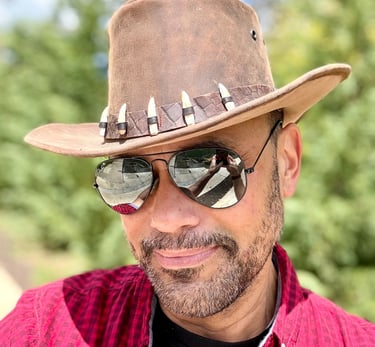
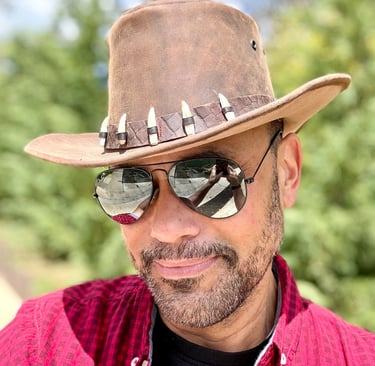
Ian Bartlett, The Real Crocodile Hunter®, recounts the challenges of Problem Animal Control in Malawi, managing baboon conflict at Mpatamanga Wildlife Ranch and the remarkable presence of a leopard — the unseen hunter.
Ian Bartlett
9/10/20263 min read


When Conservation Requires Intervention: The Baboon Problem at Mpatamanga
Wildlife conservation is not simply a matter of protecting animals. Effective conservation also requires population management, an understanding of human-wildlife conflict, and, on occasion, intervention when a species begins to threaten neighbouring communities.
I encountered precisely this situation at Mpatamanga Wildlife Ranch in Malawi.
For approximately two decades, I protected the indigenous woodland at Mpatamanga from many of the pressures affecting the surrounding landscape, particularly illegal tree cutting, charcoal production and uncontrolled fires. As habitat was progressively degraded elsewhere, the ranch provided an increasingly important refuge for wildlife.
One consequence was an expanding population of baboons.
Initially, their presence was simply part of the natural wildlife of the property. Over time, however, their numbers increased substantially and the animals began ranging beyond the ranch into neighbouring villages and cultivated areas.
This created a genuine wildlife-management problem.
From Conservation to Human-Wildlife Conflict
Baboons are highly intelligent, adaptable primates. Once they learn that cultivated crops provide an accessible source of food, controlling their behaviour can become extremely difficult.
At Mpatamanga, crop raiding became increasingly serious. Local farmers were losing produce, and the conflict between people and baboons intensified.
The situation eventually progressed beyond crop damage. Reports of aggressive behaviour and attacks on people meant that the animals could no longer be regarded simply as an agricultural nuisance.
They had become a Problem Animal Control (PAC) issue.
Problem Animal Control was not unfamiliar territory to me. During my years as a licensed crocodile hunter in Malawi, much of my work involved dealing with dangerous crocodiles that had come into conflict with people and livestock.
The species and circumstances at Mpatamanga were different, but the underlying principle was the same: wildlife conservation cannot be separated from the welfare and safety of the people who live alongside wildlife.
The Decision to Cull
Once the baboon population had reached the point where crop destruction and attacks on people were occurring, I considered intervention necessary.
This included the selective culling of problem animals.
It was not undertaken for sport, nor was killing the objective of the conservation programme. It was a management response to an escalating human-wildlife conflict.
The culled animals were also not simply left to waste. Local people consumed the meat, and the communities affected by the baboon problem were grateful for the intervention.
This is an aspect of African wildlife management that can be difficult to understand when viewed entirely from outside the communities involved.
Conservation decisions made in the field have to take account of ecological considerations, but they must also recognise food security, crop losses and human safety.
Ignoring those realities can ultimately undermine local support for conservation itself.
The Leopard at Mpatamanga
There was, however, another important element in the ecological picture at Mpatamanga.
I had evidence suggesting that a leopard was using the ranch, and I believed it may have become resident in the area.
A leopard would represent a natural predator of baboons and therefore potentially contribute to regulating their numbers. I cannot scientifically quantify what effect this particular animal had on the baboon population, and I would not claim that it solved the problem.
Nevertheless, its presence was significant.
The restoration or protection of habitat does not merely provide refuge for prey species. Given sufficient habitat and ecological connectivity, predators may also return or make use of that landscape.
My own encounter with this leopard became one of the more memorable wildlife experiences I had at Mpatamanga.
I recount that episode in Chapter 22, “The Unseen Hunter,” of Memoirs of a Real Crocodile Hunter.
The wider baboon management problem is described in Chapter 21, “A Wildlife Problem,” of Mpatamanga.
Conservation Is About Balance
The baboon problem taught me an important lesson about practical conservation.
Protecting habitat is essential, but protection alone does not guarantee that every ecological outcome will be desirable.
Wildlife populations change. Animals move across boundaries. Predators and prey interact. Agricultural land often lies immediately alongside wildlife habitat. Inevitably, there are occasions when the interests of wildlife and neighbouring communities come into conflict.
That is where wildlife management becomes as important as wildlife protection.
My approach at Mpatamanga was therefore never based on the idea that every animal should be protected under every circumstance. My objective was to conserve the habitat and its wildlife while recognising that the people living around it also had legitimate rights to protect their crops, livelihoods and personal safety.
Sometimes that required direct intervention through Problem Animal Control.
At other times, nature appeared capable of providing its own control.
And somewhere within the woodland at Mpatamanga, a leopard — the unseen hunter — may have been doing exactly that.
Ian Bartlett — The Real Crocodile Hunter®
Author of Memoirs of a Real Crocodile Hunter and Mpatamanga
https://therealcrocodilehunter.com
https://mpatamangawildliferanch.com


The Real Crocodile Hunter®
© 2026 Ian Bartlett.
The Real Crocodile Hunter® is a registered trademark. All Rights Reserved.