REPTILE AWARENESS DAY
BUT WHO PROTECTS THE PEOPLE LIVING ALONGSIDE AFRICA’S DEADLIEST PREDATORS?
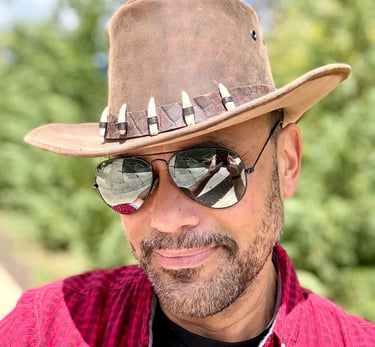
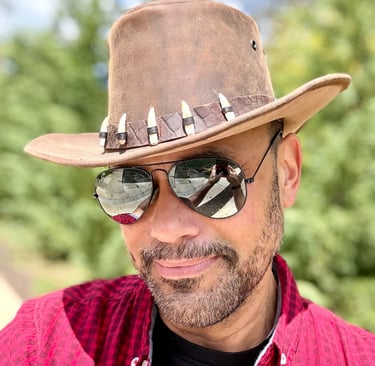
By Ian Bartlett | Britain’s Crocodile Hunter | The Real Crocodile Hunter®
10/21/20269 min read


REPTILE AWARENESS DAY — BUT WHO PROTECTS THE PEOPLE LIVING ALONGSIDE AFRICA’S DEADLIEST PREDATORS?
By Ian Bartlett | Britain’s Crocodile Hunter | The Real Crocodile Hunter®
21 October 2026
Every year, on 21 October, the world celebrates Reptile Awareness Day — an occasion dedicated to recognising the extraordinary diversity of reptiles, their importance to our ecosystems, and the need to protect them for future generations. It is a cause I wholeheartedly support. But having spent approximately ten years as a licensed crocodile hunter in Malawi, confronting dangerous Nile crocodiles that threatened communities along Africa’s rivers, I believe there is another side to the conservation debate that deserves equal attention. Who protects the people who must share their rivers, fishing grounds and drinking water with some of the most formidable predators on Earth? For many people around the world, crocodiles are fascinating prehistoric creatures, admired in wildlife documentaries, photographed on safari and celebrated as symbols of Africa’s extraordinary biodiversity. For communities living along the banks of the Shire River in Malawi, however, the reality can be very different. A crocodile is not simply an impressive reptile basking peacefully on a riverbank. It can be an invisible predator lurking beneath muddy water, capable of taking a human life in seconds.
I know this because I have experienced that world firsthand.
And it is a reality that must never be overlooked when discussing wildlife conservation.
THE REALITY OF LIVING ALONGSIDE NILE CROCODILES
The Nile crocodile (Crocodylus niloticus) is among Africa’s largest and most formidable predators. An exceptionally powerful reptile, it possesses remarkable strength, patience and an extraordinary ability to remain concealed beneath the surface of the water. Unlike many terrestrial predators, crocodiles can launch attacks with very little warning. Their victims may never see them approaching. Throughout much of rural Africa, rivers and lakes remain essential to everyday life. Fishermen depend on these waters for their livelihoods. Women collect water for their households. Families wash clothes, children play along the banks, and communities cross waterways as part of their daily routines. These activities are not recreational choices. They are often necessities of life. Yet every visit to the water’s edge can carry an element of danger where large crocodiles are present. During my years hunting dangerous crocodiles in Malawi, I encountered communities where the threat of crocodile attacks was an ever-present concern. I saw firsthand how human–wildlife conflict could affect families whose lives were closely connected to the rivers. The consequences of an attack extend far beyond the immediate tragedy. A family can lose its primary breadwinner. Children can lose a parent. A community can become fearful of the very river upon which its survival depends. For those who have never experienced such circumstances, it is easy to advocate absolute protection of crocodiles without fully appreciating the challenges faced by people living alongside them. Conservation policies must recognise that human lives matter just as much as the wildlife we seek to protect.
WHY I BECAME A LICENSED CROCODILE HUNTER
My involvement in crocodile hunting was not driven by a desire to collect trophies or pursue dangerous animals for entertainment. I worked as a licensed crocodile hunter undertaking problem animal control in Malawi. My work involved responding to dangerous crocodiles that threatened human lives, particularly those suspected of repeatedly attacking people. These operations were conducted in environments where crocodiles possessed every natural advantage. The Shire River and its surrounding waterways provided ideal habitat for these formidable predators. Dense vegetation, murky water, submerged obstacles and extensive marshlands made locating dangerous crocodiles extremely challenging. A crocodile could disappear beneath the surface in an instant, leaving little indication of its whereabouts. Hunting such an animal required patience, fieldcraft, local knowledge and an understanding of crocodile behaviour. It also required considerable respect for the animal itself. I worked alongside experienced African assistants and, when appropriate, wildlife authorities and local communities. Every operation presented its own difficulties. Some crocodiles were relatively easy to locate. Others were exceptionally elusive, disappearing for days before reappearing in areas frequented by people. What became increasingly clear to me was that the greatest danger did not always come from the largest crocodiles. Some habitual man-eaters were not particularly enormous animals. Their danger lay in their behaviour. A crocodile that had developed a pattern of attacking humans presented a very different management challenge from one that avoided human contact. This distinction is important. It is neither scientifically sound nor morally defensible to treat every crocodile as a threat simply because of its species. Equally, it would be irresponsible to ignore an individual animal that presents a serious and continuing danger to human life. Effective wildlife management requires understanding the difference.
CROCODILE CONSERVATION AND HUMAN SAFETY ARE NOT ENEMIES
One of the greatest misconceptions surrounding wildlife conservation is the belief that protecting animals and protecting people are opposing objectives. They are not. Both are essential. Crocodiles have occupied our planet for millions of years, evolving into extraordinarily successful predators. They play important ecological roles within freshwater environments, participating in complex food webs and influencing the populations of other animals. Their continued survival is important to the health and biodiversity of African ecosystems. I have always respected crocodiles for their remarkable evolutionary adaptations, intelligence in responding to their environment, and extraordinary ability to survive. Indeed, spending years studying their behaviour in the field gave me a greater appreciation of these animals than I might otherwise have developed. But respect for a predator does not require ignoring the danger it can pose. A responsible conservation strategy must distinguish between protecting healthy crocodile populations and managing individual animals that represent an unacceptable risk to human communities. Where possible, preventative measures should always be considered. These may include safer water-access points, improved community awareness, practical barriers, appropriate monitoring and early intervention when dangerous behaviour is identified. In some circumstances, relocation may be considered, although moving a large crocodile presents significant logistical, ecological and safety challenges. Where an individual crocodile presents an immediate and serious danger, wildlife authorities may determine that lethal control is necessary. Such decisions should be lawful, evidence-based and proportionate to the threat. Protecting an endangered ecosystem does not mean every individual predator must be protected regardless of its behaviour. Nor should conservation become an excuse for indiscriminate killing. The objective must always be balance.
THE PEOPLE WHO LIVE WITH WILDLIFE MUST HAVE A VOICE
Conservation discussions are often dominated by governments, international organisations, researchers and wildlife enthusiasts. Their contributions are valuable. However, there is another group whose perspective deserves particular attention. The people who live alongside dangerous wildlife every day. A fisherman who must enter crocodile-infested waters to feed his family understands the risks in ways that cannot be fully appreciated from a conference room. A mother collecting water from a river knows the anxiety of approaching a place where crocodiles may be concealed. A village that has experienced repeated attacks will understandably view crocodile conservation differently from tourists observing these animals from the safety of a safari vehicle. These perspectives should not be dismissed as ignorance or hostility towards wildlife. They are the experiences of people whose safety and livelihoods are directly affected. Conservation programmes that fail to consider local communities risk creating resentment towards the very animals they seek to protect. By contrast, programmes that incorporate local knowledge, provide practical safety measures and recognise the legitimate concerns of rural populations have a stronger foundation for long-term success. Wildlife conservation cannot succeed sustainably without the participation and support of the communities living alongside that wildlife. This is one of the most important lessons I learned during my years in the African wilderness.
FROM CROCODILE HUNTER TO CONSERVATIONIST
My experiences with crocodiles were only one chapter of a much longer relationship with Africa’s natural environment. Over time, my understanding of conservation developed beyond the management of dangerous animals. I became increasingly concerned about the destruction of indigenous woodland, the loss of wildlife habitat and the long-term consequences of environmental degradation. These concerns eventually became central to my work at Mpatamanga Wildlife Ranch in Malawi. Situated near the Shire River at Mpatamanga Gorge, the ranch became the focus of more than twenty years of personal conservation efforts. Working with local scouts and caretakers, I sought to protect indigenous woodland and the wildlife habitat it supported. Our efforts involved monitoring the land, conducting patrols, managing fire risks and confronting the persistent threat of illegal activities. This work was not undertaken as part of a large international conservation organisation. It was a long-term personal commitment sustained through determination, local cooperation and considerable financial sacrifice. A forestry inventory undertaken at Mpatamanga estimated more than 500,000 indigenous trees within the conservation area, highlighting the ecological importance of the woodland I had worked to protect for two decades. The experience reinforced a principle that had already become clear during my crocodile-hunting years. Conservation is not simply about protecting individual animals. It is about protecting habitats, maintaining ecological balance and recognising the relationship between people and the natural world. The survival of Africa’s wildlife ultimately depends upon the preservation of the environments in which these animals live. Without functioning ecosystems, even the most determined efforts to protect individual species will have limited long-term success.
THE CONTRADICTION AT THE HEART OF MODERN CONSERVATION
There is an uncomfortable contradiction in some contemporary discussions about wildlife protection.People living thousands of miles from Africa may passionately advocate protecting dangerous predators while having little personal experience of the risks faced by communities sharing their habitat. It is relatively easy to admire a crocodile from behind a camera lens. It is considerably more difficult to appreciate that same animal when it threatens the lives of people who depend on the river for their survival. This does not invalidate the importance of reptile conservation. Quite the opposite. It demonstrates why conservation must be grounded in practical realities rather than sentiment alone. The challenge is not choosing between people and crocodiles. The challenge is developing effective management systems that allow both to survive. That requires scientific research, responsible wildlife authorities, adequate resources, community participation and a willingness to make difficult decisions when human safety is at stake. It also requires acknowledging that not every conflict has a simple solution. Some situations demand intervention. Others require education, prevention or changes in how people interact with wildlife habitats. There is no single approach suitable for every river, every community or every crocodile. The most effective solutions must reflect local conditions and the behaviour of the animals involved.
WHAT REPTILE AWARENESS DAY SHOULD REALLY REPRESENT
Reptile Awareness Day provides an opportunity to celebrate animals that are frequently misunderstood, feared or persecuted. Snakes, lizards, tortoises, turtles and crocodilians all contribute to the remarkable biodiversity of our planet. Many reptile species face serious threats from habitat destruction, illegal trade, pollution and human persecution. Their protection is important. But I believe the occasion should also encourage a broader discussion about our responsibilities towards the people who share their environments with potentially dangerous wildlife. Awareness should extend beyond admiration. It should include education about animal behaviour, practical conflict prevention, responsible habitat management and the realities of coexistence. Above all, it should recognise that conservation is not achieved merely by declaring an animal protected. Real conservation requires understanding how wildlife interacts with people, landscapes and livelihoods. For crocodiles, this means protecting viable populations while ensuring that dangerous individuals are managed responsibly. For communities, it means having access to effective safety measures and wildlife authorities capable of responding when serious threats arise. For conservationists, it means recognising that protecting nature and protecting human life are complementary responsibilities.
MY MESSAGE AS BRITAIN’S CROCODILE HUNTER
Today, I write as a British author, former licensed crocodile hunter and conservationist whose experiences were shaped by the rivers, wilderness and communities of southern Africa. My years hunting dangerous Nile crocodiles taught me to respect these extraordinary predators. My subsequent conservation work at Mpatamanga taught me the importance of protecting the ecosystems upon which wildlife depends. Together, these experiences shaped my understanding of what responsible conservation should represent. I do not believe crocodiles should be persecuted simply because they are dangerous. Nor do I believe rural African communities should be expected to accept preventable deaths in the name of wildlife protection. There must be a balance. That balance requires knowledge, experience, compassion and a willingness to confront difficult realities. It also requires listening to the people who have spent their lives sharing the landscape with Africa’s wildlife. My experiences were not learned exclusively from textbooks, academic studies or wildlife documentaries. They were shaped by years on African rivers, working alongside local communities and confronting the consequences of human–wildlife conflict firsthand. Those experiences remain central to my identity as The Real Crocodile Hunter®. And they continue to influence my approach to conservation today.
A FINAL THOUGHT
On this Reptile Awareness Day, I encourage everyone to appreciate the extraordinary creatures that have inhabited our planet for millions of years. Learn about them. Respect them. Support the protection of their natural habitats. But also remember the fishermen, mothers, children and rural communities whose lives are intertwined with the environments these predators inhabit. Their safety, dignity and livelihoods deserve our concern too. Because true conservation is not about choosing between protecting wildlife and protecting people. It is about finding responsible ways for both to survive. And that is the reality of conservation in Africa. A reality I have lived, not merely studied.
ABOUT THE AUTHOR
Ian Bartlett — Britain’s Crocodile Hunter | The Real Crocodile Hunter®
Ian Bartlett is a British author, former licensed crocodile hunter and conservationist, born in Zambia and raised in Malawi. He spent approximately ten years conducting licensed problem animal control operations involving dangerous Nile crocodiles in Malawi, working to help protect communities threatened by crocodile attacks. He subsequently devoted more than twenty years to conservation efforts at Mpatamanga Wildlife Ranch, protecting indigenous woodland and wildlife habitat along the Shire River. He is the author of Memoirs of a Real Crocodile Hunter, an account of his experiences confronting dangerous crocodiles in Africa, and Mpatamanga: My Twenty-Year Fight for Africa’s Wild Places, which documents his conservation journey. Through his registered brand, The Real Crocodile Hunter®, he continues to share authentic African wildlife experiences while advocating responsible conservation and practical approaches to human–wildlife coexistence.
OFFICIAL WEBSITES
The Real Crocodile Hunter® https://therealcrocodilehunter.com
Ian Bartlett — British Author https://ianbartlett.co.uk
Mpatamanga Wildlife Ranch https://mpatamangawildliferanch.com
#TheRealCrocodileHunter #MemoirsOfARealCrocodileHunter #Mpatamanga #ReptileAwarenessDay #BritainsCrocodileHunter #HumanWildlifeConflict #NileCrocodile #WildlifeConservation #AfricanWildlife #Malawi #Conservation #IanBartlett
The Real Crocodile Hunter®
© 2026 Ian Bartlett.
The Real Crocodile Hunter® is a registered trademark. All Rights Reserved.