The World’s Most Dangerous Reptile: The Truth About Crocodile Attacks
Ian Bartlett
4/11/20262 min read
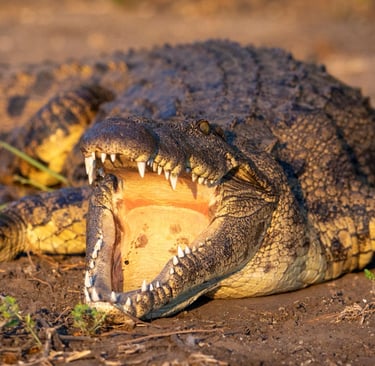
I worked in problem animal control along some of Africa’s most dangerous rivers for over a decade. Not from a distance—but in the same waters where people fish, wash, and live side by side with one of the most efficient predators on Earth.
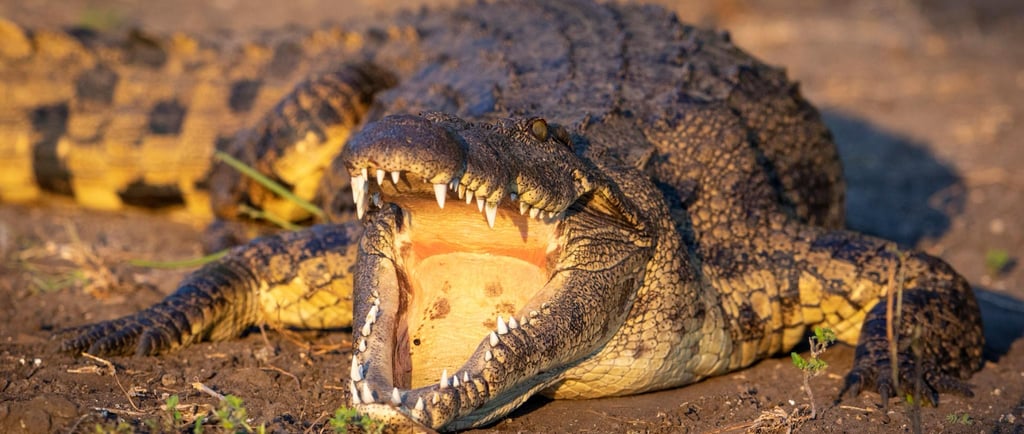
Crocodiles are responsible for an estimated 1,000 human deaths every year. In reality, that number is likely higher. Many attacks happen in remote areas where incidents are never officially recorded.
That makes crocodiles one of the deadliest animals in the world.
Where Crocodile Attacks Happen Most
Crocodile attacks are not random—they follow human activity.
Recent data shows consistent hotspots:
Indonesia reports some of the highest annual attack numbers
Malawi, Zambia, and Zimbabwe remain high-risk due to constant reliance on river systems
Parts of India also see frequent encounters, particularly in rural communities
These are regions where rivers are not optional—they are essential to daily survival.
The Deadliest Species
Two species dominate fatal attack statistics:
Nile Crocodile
Saltwater Crocodile
Both are apex predators capable of taking down large prey with ease. In many regions, over 60% of attacks are fatal.
That level of lethality is unmatched among large reptiles.
Why Crocodiles Attack Humans
Most attacks are not about “man-eaters.” They are about opportunity.
Humans enter the water for everyday tasks:
Fishing (the most common cause)
Washing clothes or bathing
Collecting water
Swimming in unsafe areas
From a crocodile’s perspective, these are predictable patterns. Same place. Same time. Every day. And crocodiles are patient.
How an Attack Happens
A crocodile does not chase—it ambushes.
You won’t see it. Often, only the eyes sit above the surface. Sometimes nothing at all.
Then, in a fraction of a second:
A sudden strike
A powerful grip
A pull into deep water
What follows is the death roll—a violent spin designed to drown and dismember prey.
In most cases, there is no escape.
The Biggest Misconceptions
Size doesn’t define danger — smaller crocodiles can be just as lethal
Still water doesn’t mean safe water
No recent attacks doesn’t mean no crocodiles
Crocodiles don’t announce themselves. They wait.
How to Stay Safe Around Crocodile Waters
If you are anywhere near crocodile habitat:
Never assume a river is safe
Avoid the water’s edge, especially at dawn and dusk
Do not clean fish near the bank
Keep a safe distance at all times
Follow local warnings and knowledge
There’s a rule in Africa: If there’s enough water to wash your hands, there’s enough water for a crocodile.
Crocodiles are not monsters. They are perfectly evolved predators that have survived for millions of years.
The real danger comes when humans and crocodiles share the same space.
I’ve seen what happens when that line is crossed.
And it rarely ends well for the human.
The Real Crocodile Hunter®
© 2026 Ian Bartlett.
The Real Crocodile Hunter® is a registered trademark. All Rights Reserved.